Entries tagged with strategy.

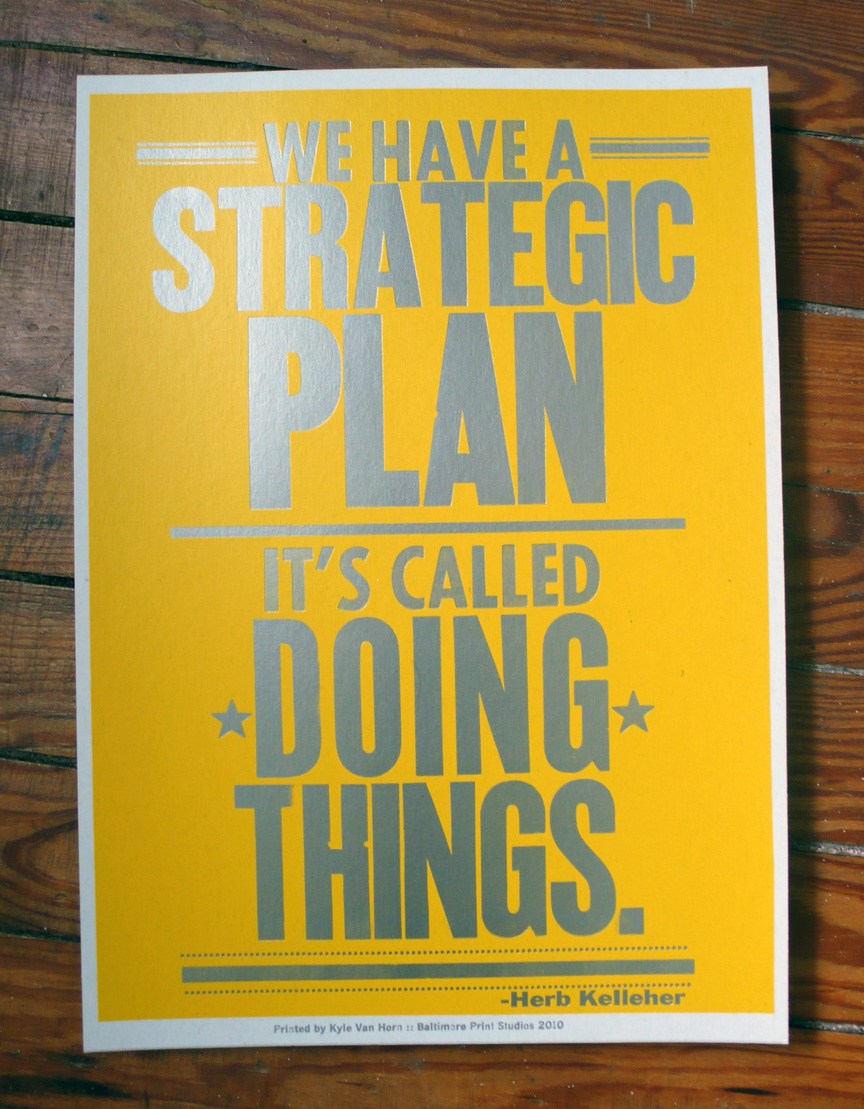
The best strategy: Don’t strategize.

This may be a controversial statement, but I believe it to be true:

The best digital communications strategy is to learn how to not be strategizing so much.

It connects us back to the ‘be authentically transparent’ concept, the ‘interact like humans’ concept, all the various statements that are so hard to quantify.

What I mean is, when we engage in communication with another person, be it for personal or professional reasons, and we are ‘in the moment’, responding naturally and genuinely and listening to what the other person is saying rather than just waiting to talk, conversations take on a natural flow and rhythm that we don’t even notice as something special other than “that was a nice conversation”.

Inversely, when we are always thinking of the ‘most appropriate’ way to respond, when we ‘dont want to hurt someones feelings’, when we “think about” the “best thing to say” before we say it, we are up in our heads, making all kinds of assumptions about probable outcomes, filtering through a usually inaccurate and limiting sense of who we think we are as individuals, and viewing the world through an ‘us vs them’ filter.

This leads to unengaging and disconnected conversations, be it with a coworker, as a business or with a girlfriend.  Even if people can’t quite put their finger on it, something feels off about the conversation, and they most likely wont remember it that fondly.

This is not our fault of course.  We are trained in business school that ‘those people out there’ are a demographic to be targeted.  We are trained by our own minds not to trust our instincts, no matter how much “go with your gut” lessons we learn.  We want to be safe. We want to plan for every contingency.

The thing about contingency planning is that the element of spontaneity that drives memorable interactions gets lost, and people feel as if they’re being treated generically rather than personally.

So I urge you (and I say this as someone with Communications Strategist on my business card): Whenever possible, don’t strategize.  Just do it.

Am I wrong?

The difference between a message and a story

In communications, there are those who think strategically and those who think tactically.  At my job, we’ve even named our blog Thinkers and Doers to reflect both sides of the coin.  Ideally, both sides inform the other.  No tactic lives out there on its own (“We need to have a Twitter account because people are talking about twitter!”) without some kind of strategy (or valuable reason for existing behind it).  In the same way, having a clever strategy without any specific toolsets identified can languish in ‘thought leadership land’.

Historically, many companies have focused on a ‘message’ as the core unit of visibility.  “Just Do It” is a message. “Made From The Best Stuff On Earth” is a message.

Those are all well and good (and have had their time), but these days the opportunities for telling a story are vast.  “Just Do It” may not have any meaning on its own (aside from “I know that, thats the Nike tagline”), but pair it with images of Michael Jordan dunking from the free throw line with room to spare, or Tiger Woods—well, maybe that’s a bad example. I would argue that its the story behind the message that has caused “Just Do It” to remain in the cultural lexicon.

The great thing for business is that the internet has opened up an almost infinite opportunity to tell stories to deepen the experience that a person has with a brand. Through the use of video, podcasts, blogs, conversations, and especially by empowering and encouraging those who are already on board to be a part of the storytelling process on behalf of your brand, you have the opportunity to build a story ecosystem for very little cost beyond earning the trust of your customers online through real interactions.

Just imagine the possibilities, of what you could do with that kind of evangelical content, coming from people with no financial stake, just out of love for some aspect of what you do. Just imagine what message that would send to people who could potentially be interested in your product, service, campaign, charity, country.

Just do it.

Align Your Intents: Removing Friction in Brand Experiences By Showing Interest In End-Users

The infrastructure for global communication has hit a tipping point in the last few years.  New technologies give each of us an exponentially louder voice with which to share stories of exceptional experiences with companies (both positive and negative).  In order to survive, companies must take a look at existing conflicts between end-users intents and their own, in a way that may initially seem quite counter-intuitive. The points where the brands intent and ours are most in conflict lead to the most negatively memorable experiences, which carry a lot of power.  Let me explain.

When interacting with a company, our intent as end-users is rarely, if ever, based on figuring out how to give them money.  Mostly, our interactions are based on getting a need or a want addressed as efficiently as possible.  This is, more often than not, in direct conflict with the implicit (if not explicit) intentions of the companies we are interacting with.  This conflict of intents, historically ‘part of the cost of doing business,’ has become much more of an active topic of conversation online and offline, which is having an ever-increasing impact on our overall perception of companies and our willingness to engage with them (e.g. spend our money with them)

An obvious example of a decision made in conflict is DRM.   The intent of the business (protecting their self-perceived ‘most important assets’ from their customers) was in direct conflict to the customers intent (purchasing music in a manner that gives them ownership of their copy).  Instead of being interested in interacting with their consumers, the entertainment industry defaulted to treating each and every one of us like potential criminals, and attempts to engage were ignored or met with legal action.  Choosing instead for your businesses intent to involve an active and genuine interest in people, communities and behavior, asking questions, and generally being interested leads to much longer term gains and sustainability (something companies that have embraced DRM are struggling with right now).

My friend Amber Naslund recounts a story about how the Jurys Boston Hotel picked up on something she said on twitter about her experience there and took the time to email to thank her for her mention and (something Amber glossed over a bit but I think is so important) took an interest in her as a person via email, followed up with her to learn more, and set her up to have an awesome experience the next time.  This resulted in the creation of a new and powerful customer evangelist.  In Amber’s words, posted to a block with :

I have a hotel in Boston that feels very much “mine”. Why would I stay somewhere else when I know the people, and feel like they’re genuinely happy when I come back again?

If Jury’s Boston had simply stuck to the ‘be a hotel where people give us money to have somewhere to sleep’ intent, she most likely would have had a perfectly fine time and probably not given it the thought to dedicate the home page of her site to the experience.  By taking the time to listen, learn and reorient their intentions to match (and exceed) hers,  Jury’s Boston created an experience for her that earned both her loyalty, trust and her voice to others.  For this interaction, the intent of the company was to create a great experience for Amber, and to fufill her needs.   Jury’s is, of course, a business, and would have been happy to take her money and move on.  They decided, for this interaction at least, that their intent was to make the interaction more personal.  Total cost to them: One phone call.  Total return:  A fan for life, with incentive to share the experience with her friends, followers, everyone who reads her blog, each of whom now have a hotel in mind to stay at when they’re in Boston.

Companies may look at this concept and respond with trepidation.  “The whole purpose of a company is to increase its own bottom line, otherwise it wouldn’t exist!” is a popular response.  While this underlying statement may be true, the intent of how one reaches profitability is something that is much more flexible than most companies think.  The challenge lies when they have been set up in a way that leaves no room for taking an interest when providing a service or bringing a product to market.  It is not a question of willingness, but actually deciding to take the time and effort to address a lack of room in the workflow for genuine human interest and curiosity.

So, take a look (and, more importantly, a listen) around where you work.  During the course of the day, how much time is spent in your company being interested in customers?  Pay attention to how interactions with end users are phrased.  Are people interested in connecting, or are they more interested in “identifying target audiences” and “demographics and psychographics” to the exclusion of other things.  I think you’ll find the vocabulary very telling.

What bit of information would you like to share with companies that could make for a more compelling engagement with you? Are they giving you a place to tell them?  Are they interested?